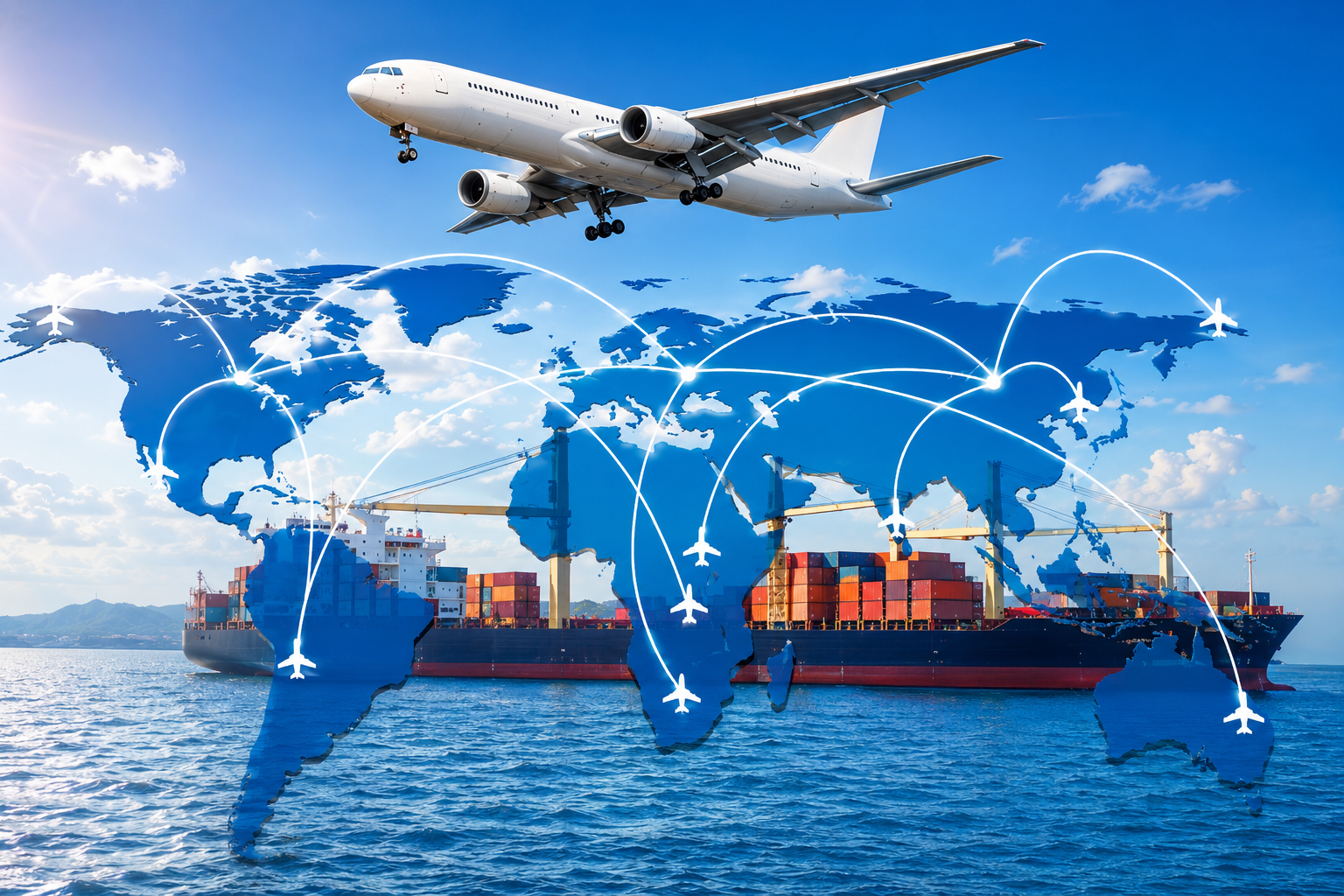
Freight forwarding is the process of planning, coordinating, and managing the movement of goods from origin to destination. It is not limited to booking a vessel, aircraft, or truck; it may also include receiving and consolidating cargo, arranging inland transportation, booking freight capacity, preparing and reviewing documents, warehousing, shipment tracking, and coordinating final delivery.
If you are importing goods from China, choosing the right freight forwarder can affect transportation costs, scheduling, coordination with suppliers, and operational risks. In this guide, we first clarify the difference between Freight, Freight Forwarding, and Freight Forwarder, then examine transportation methods, FCL and LCL, the role of a freight forwarder in importing from China, costs, documents, insurance, Incoterms, and the criteria for choosing the right company.
Freight forwarding involves coordinating transportation, documentation, and logistics operations.
What Is the Difference Between Freight, Freight Forwarding, and a Freight Forwarder?
These three terms are sometimes used interchangeably, but they are not conceptually identical. “Freight” generally refers to the goods or cargo; “Freight Forwarding” refers to the service and process of coordinating transportation; and a “Freight Forwarder” is the company or person that performs this coordination for the cargo owner.
| Term | Simple meaning | Use in importing |
| Freight | Cargo or shipment | Goods that need to move from origin to destination |
| Freight Forwarding | Service and process of coordinating transportation | Planning and managing the route, documents, and operations |
| Freight Forwarder | Forwarding company or agent | Coordinator between the cargo owner and transportation providers |
| Carrier | Transportation provider | Performs a specific physical part of transportation, such as a shipping line or airline |
| NVOCC | Ocean transportation operator that does not own vessels | In some ocean operations, consolidates transportation capacity and offers it under its own documentation structure |
What Is Freight Forwarding and What Role Does It Play in International Trade?
In an international supply chain, the cargo owner usually deals with several different parties: the seller or factory, warehouse, inland carrier, shipping line or airline, customs, and the destination delivery party. A freight forwarder helps coordinate these connections and makes the overall process easier to manage.
A freight forwarder does not necessarily own a vessel or aircraft. The main value of the service lies in planning, coordination, capacity booking, information control, and operational tracking. Depending on the contract and route, the service may extend from cargo pickup at origin to delivery at destination.
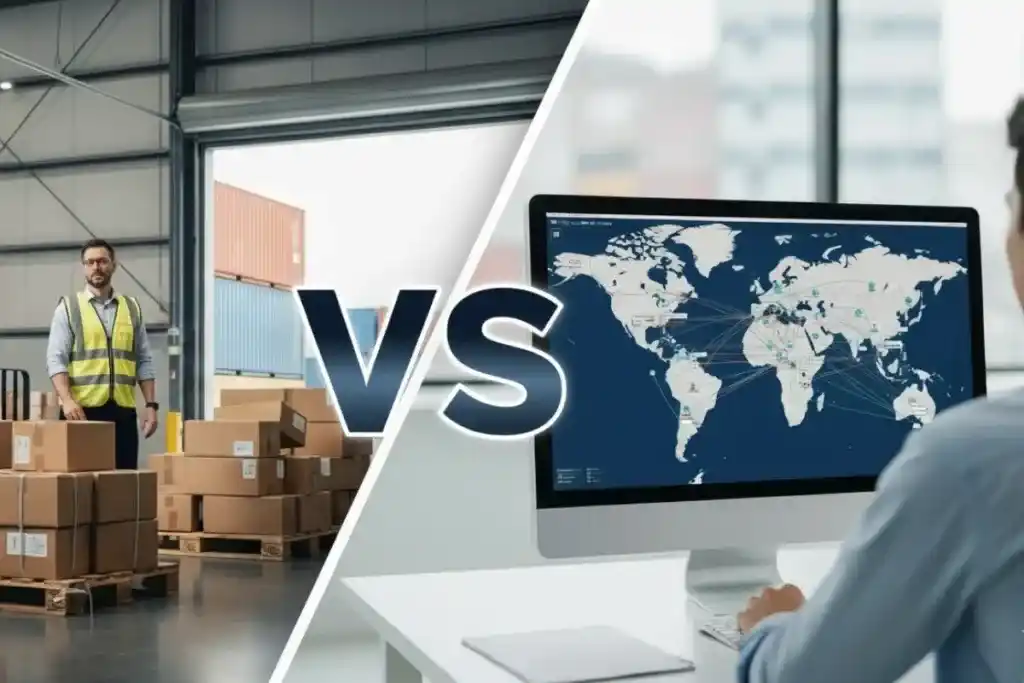
What Is the Difference Between a Freight Forwarder and a Carrier?
A freight forwarder and a carrier do not have the same role in the transportation chain.
A Carrier performs a specific physical part of transportation; for example, a shipping line handles ocean transportation or an airline handles the air segment. A freight forwarder, on the other hand, coordinates among different options according to the shipment’s requirements and can connect several parts of the supply chain.
In some ocean freight operations, an NVOCC may also be involved. An NVOCC does not necessarily own vessels; instead, it obtains transportation capacity from shipping lines and manages it for different shipments. Before signing a contract, it is therefore important to understand exactly what role your contractual party has and which company is responsible for each part of the transportation process.
What Are the Main Responsibilities of a Freight Forwarder?
- Reviewing cargo information, weight, volume, and pickup location
- Selecting and comparing transportation options based on time, cost, and shipment requirements
- Booking freight capacity and coordinating with the Carrier or other service providers
- Arranging inland transportation from the factory or warehouse to the port or airport
- Receiving, consolidating, and preparing cargo when required
- Coordinating shipping documents and reviewing information before final issuance
- Tracking shipment status and communicating route changes
- Coordinating warehousing, loading, and delivery when these services are included in the contract
The freight forwarder’s responsibilities depend on the contract, route, and type of service. Before starting, clearly confirm which services are included in your quoted price or contract.
Transportation Methods in Freight Forwarding
The transportation method should be selected based on the type of goods, volume and weight, cargo value, required delivery time, origin and destination, and budget. For many imports, no single method is best on its own; combining inland, ocean or air transportation with final delivery may be more practical.
Ocean Freight
Ocean freight is often an important option for large shipments and intercontinental trade. On many routes, it is more economical than air freight, but transit times are longer and factors such as vessel schedules, port congestion, and port operations must also be considered when planning.
What Are FCL and LCL?
| Method | Definition | Suitable for | Key point |
| FCL | A full container for one shipment or shipper | Cargo with enough volume to use a container effectively | Compare timing and cost against the actual cargo volume |
| LCL | Less-than-container-load cargo; multiple shipments in one container | Shipments that do not fill a full container | Consolidation, delivery time, and origin/destination costs are important |
For multi-supplier imports from China, LCL can be useful for consolidating smaller shipments. However, the choice between FCL and LCL should be based on volume, number of suppliers, cargo readiness times, and total cost—not simply the base freight rate.
Air Freight
Air freight can be suitable for goods where delivery speed is more important or where the value-to-weight ratio is higher. In this method, both actual weight and volumetric weight can affect the cost, so providing accurate package dimensions before requesting a quotation is essential.

Land Freight and Multimodal Transportation
Land transportation is commonly used to move goods between factories, warehouses, ports, and airports, or along routes between neighboring countries. In multimodal transportation, several methods are connected into one logistics chain; for example, cargo may travel by truck from the factory to the port, then by vessel, and finally by truck to the destination. Coordinating the timing of these stages is an important part of freight forwarding management.
The Role of a Freight Forwarding Company in Importing Goods from China
The China import route may involve multiple suppliers, consolidation, and international transportation.
Importing from China is not simply a matter of selecting a factory and paying for the purchase. When an order involves several suppliers, cities, readiness dates, or product types, logistics coordination becomes more important.
In such situations, a freight forwarder can coordinate communication among the seller, warehouse, inland carrier, Carrier, and consignee. For example, the location and readiness time of each shipment can first be confirmed; the goods can then be collected at a consolidation point when necessary, after which the final transportation method can be selected following information checks and preparation.
Freight Forwarding Steps for Imports from China
| Stage | What should be checked? |
| 1. Order information | Product type, quantity, weight, dimensions, value, and readiness |
| 2. Supplier location | Factory city, distance to warehouse/port, and inland delivery time |
| 3. Possible consolidation | Number of suppliers, volume of each shipment, and feasibility of collection at one warehouse |
| 4. Transportation method | FCL, LCL, air, land, or multimodal based on time and cost |
| 5. Documents | Commercial invoice, packing list, bill of lading information, and route-specific documents |
| 6. Loading and departure | Delivery coordination with the Carrier and departure schedule control |
| 7. Tracking and destination | Shipment tracking, destination coordination, and delivery according to the contract |
Checking the Supplier and Pickup موقعیت مکانی
Before booking transportation, determine which city or factory in China the goods will depart from. The distance from the factory to the warehouse or port, delivery terms, and the seller’s contractual responsibilities can change the cost and timing of the inland portion of the route.
Consolidating Goods from Multiple Sellers
If an importer purchases from several factories, the goods can, when appropriate, be collected at one warehouse and prepared for final transportation. This can simplify coordination, but the number of cartons, dimensions, weight, supplier readiness times, and compatibility of the goods should be reviewed before making the decision.
Checking Import Documents
Commercial invoices, packing lists, bill of lading information, and other documents should be consistent with one another as much as possible. A freight forwarder can review information related to transportation operations and coordinate document issuance, but the legal responsibility for the accuracy of commercial information and required documentation should be clearly established from the beginning.
Managing Time in Imports from China
The actual import timeline is not simply the sailing or flight time. Production readiness, inland transportation in China, warehouse receiving, consolidation, port operations, transit, and final delivery all affect the total time. During busy periods and Chinese holidays, capacity and sailing schedules may also change; therefore, allowing time buffers and having an alternative option are important.

What Are Incoterms and Why Do They Matter When Choosing a Freight Forwarder?
Incoterms are standardized rules that define certain responsibilities, costs, and the transfer of risk between the seller and buyer in a transaction. A freight forwarder cannot replace the commercial contract, but understanding the delivery term is essential for transportation planning.
| Common term | Simple interpretation for the buyer | Logistics point |
| EXW | The buyer handles more of the transportation coordination from the seller’s location | Review origin inland transportation costs and responsibilities |
| FOB | The seller delivers the goods to the agreed handover point at the origin port | Review costs after the handover point carefully |
| CIF | The seller covers transportation and insurance to the destination port under the contract terms | Review costs and responsibilities after the port separately |
| DDP | The seller has broader responsibility for delivery to the destination | Actual customs and delivery conditions in the destination country must be clear |
This table is only a simplified explanation and should not replace reviewing the commercial contract and the official Incoterms rules for a transaction. The key point is to know exactly which parts of the route are the seller’s and buyer’s responsibility before comparing freight forwarder quotations.
How Do You Choose the Right International Transportation Company?
Choosing a freight forwarder should not be based on comparing a single number on a quotation. A low-priced offer may exclude certain services or costs. A comparison is meaningful only when the route, transportation method, service level, and cost items in the two quotations are as similar as possible.
Experience on the Relevant Route
Overall company experience is important, but experience with the specific route, origin country, cargo type, and transportation method matters more. If you are importing from China, ask about the company’s experience receiving goods from Chinese suppliers, consolidating cargo, arranging ocean or air freight, and managing destination operations.
Operational Network and Responsiveness
Having a team or operational partner at origin and destination can simplify cargo collection, documentation, and shipment tracking. Also assess response times from the quotation stage, because in international operations, delayed decisions can result in lost capacity or schedule changes.
Rate and Cost Transparency
Before confirming a shipment, clarify how the main freight charge, inland transportation, port charges, documentation, warehousing, destination services, and other potential costs are calculated. Terms such as THC, demurrage, and detention may add to the final cost under certain circumstances and should be reviewed based on the route and contract.
Communication and Reporting Quality
A suitable freight forwarder should be able to communicate shipment information clearly: the current status, next step, estimated timing, and any issue requiring the customer’s decision. A clear tracking and reporting channel is especially valuable for multi-supplier shipments.
How Is Freight Forwarding Cost Calculated?
Transportation cost is not limited to the base freight rate; it depends on cargo specifications and the services included in the route.
Freight forwarding does not have one fixed rate for all shipments. Weight and volume, product type, origin and destination, transportation method, season and market capacity, packaging, and service level can all affect the cost.
| Cost factor | Why it matters | Information needed for a quotation |
| Weight and volume | Important pricing basis, especially for air freight and LCL | Weight, carton count, dimensions, and pallet type |
| Origin and destination | Changes distance and access to transportation routes | Factory city, port/airport, and final destination |
| Transportation method | Ocean, air, land, and multimodal transportation have different cost structures | Required timing and preferred transportation method |
| Origin services | Pickup, inland transportation, warehousing, and consolidation may have separate costs | Delivery location and consolidation requirements |
| Destination services | Delivery, warehousing, documentation, or other services may be charged separately | Expected delivery type |
| Potential additional costs | Depending on the contract and route, these can affect the final amount | Pricing terms and items excluded from the rate |
For a realistic estimate, provide information such as the packing list, weight, dimensions, number of packages, origin city, destination, and required timing to the freight forwarder. The more accurate the initial information, the more reliable the comparison between quotations will be.
Important Documents in International Transportation
Accurate documentation is an important part of coordinating international transportation.
The documents required depend on the goods, countries, transportation method, and transaction terms. Common documents include a commercial invoice, packing list, bill of lading, certificate of origin, and documents specific to the type of goods.
What Is a Bill of Lading? House B/L and Master B/L
A bill of lading is one of the key transportation documents and provides information about the shipper, consignee, cargo, and transportation terms. In some freight forwarding structures, the freight forwarder may issue a House Bill of Lading while the Carrier issues a Master Bill of Lading. Which document applies to your transaction depends on the transportation structure and the parties involved.
Before final issuance, carefully review the shipper and consignee names, cargo description, number of packages, and other important information. Correcting a document after issuance may create additional time and costs.

Commercial Invoice and Packing List
The commercial invoice shows transaction information and the value of the goods, while the packing list provides details about packaging, number of packages, weight, and dimensions. Keeping the information in these documents consistent is important for reducing errors in transportation operations and subsequent procedures.
Certificate of Origin and Supporting Documents
A certificate of origin is used to identify the country of origin of the goods and may be required depending on the destination and transaction requirements. Some products may also require permits or specialized certificates. Responsibility for preparing each document should be clearly assigned among the seller, buyer, freight forwarder, and other relevant parties from the beginning.
Insurance and Risk Management in Freight Forwarding
Risk management should be addressed before shipment and tailored to the type of cargo.
International transportation involves risks such as damage, theft, loss, delays, or costs caused by route disruptions. Cargo insurance can provide financial protection for covered losses, but cargo insurance is not the same as the freight forwarder’s liability, and the terms of each insurance policy should be reviewed separately.
Cargo Risk Assessment
Fragile, high-value, perishable, or temperature-sensitive goods require a different plan. Before booking transportation, consider packaging, securing methods, temperature and humidity conditions, transit duration, and cargo value.
Proper Packaging
Cartons, pallets, cushioning, and securing methods should be appropriate for the product’s material, weight, and sensitivity. In ocean freight, the long transit period and environmental conditions are also important. If goods from several suppliers are consolidated, coordinating packaging before the cargo reaches the warehouse can help prevent later problems.
How Is Technology Changing Freight Forwarding?
Digital tools can simplify shipment tracking and the management of transportation documents and information.
Today, many freight forwarding operations use digital tools for quotations, document uploads, tracking, and notifications. The main benefit of technology appears when shipment information is recorded and updated through a clear process and the operations team can make decisions based on it.
Online Shipment Tracking
Online tracking helps importers better manage arrival times, warehouse planning, and inventory. However, it should be clear where the information comes from and how frequently it is updated.
Digital Document Management
Digital document storage can simplify access and coordination. At the same time, information security, access control, and backups should be taken seriously.
Common Mistakes When Choosing a Freight Forwarder
Choosing Only Based on Price
A low price does not always mean a lower total cost. Some origin or destination services may be excluded from the initial quotation, or a cheaper route may take longer. Compare quotations under the same conditions and based on total cost.
Ignoring Delivery Time
If a delay of several days can cause inventory shortages or lost sales, time should be assigned a financial value in your decision. Sometimes a faster option, despite a higher freight charge, is more economical for the business.
Ignoring Contract Terms and Incoterms
Before transportation begins, clarify the delivery point, cost responsibilities, and transfer of risk. A freight forwarder can explain transportation-related aspects, but the commercial contract should be carefully reviewed by the transaction parties.
Providing Incomplete Cargo Information
Incorrect information about weight, volume, number of packages, product type, or pickup location can change the initial quotation. For an accurate quotation, provide real and up-to-date information.
Having No Contingency Plan
Changes to vessel schedules, port congestion, closures, or production delays can affect the route. For time-sensitive shipments, ask about alternative solutions from the beginning.
Why Is Choosing a Freight Forwarder Especially Important for Imports from China?
In imports from China, an order may involve several suppliers, cities, readiness dates, and one final destination. Therefore, the value of a freight forwarder is not limited to purchasing a freight rate; coordinating cargo collection, consolidation, documents, warehousing, and scheduling is also important.
For this reason, when choosing a transportation company for China, ask questions such as: Can you collect cargo from multiple suppliers? Where will the goods be consolidated? What information is required for a quotation? Which costs are outside the initial rate? How is tracking handled? And what alternative options are available if the transportation schedule changes?
How Does Pamika Help With Logistics From China?
Pamika provides logistics services from China through its base in Yiwu. Our services include sourcing, supplier management, inspection and quality control, warehousing, and transportation.
We receive and consolidate cargo from multiple sellers at our Yiwu warehouse and help you review suitable LCL transportation options based on your shipment requirements.
We also provide ocean, air, and land transportation, as well as Door-to-Door services. If you are working with multiple suppliers in China, we can help coordinate your cargo, consolidate shipments, review transportation options, and organize the logistics process based on your order details.
The most suitable transportation route and final cost depend on factors such as the type of goods, volume, weight, origin, destination, and required delivery time.
Related services: Pamika Logistics Services China Import Services
Freight Forwarding Company Selection Checklist
| Criterion | Key question before cooperation |
| Route experience | Does the company have real experience with the origin, destination, and transportation method required? |
| Price transparency | Which costs are included in the rate and which are calculated separately? |
| Cargo consolidation | For purchases from multiple suppliers, can the company receive and consolidate the goods? |
| Documents | Who reviews and coordinates bill of lading information and other documents? |
| Tracking | How and how often will I receive shipment status updates? |
| Responsiveness | Who will respond if the schedule changes or a problem occurs? |
| Alternative options | If the route or capacity changes, what solutions will be considered? |
| Contract terms | What exactly are the delivery point, cost responsibilities, and service level? |
Frequently Asked Questions About Freight Forwarding
What is freight forwarding?
Freight forwarding is the process of coordinating and managing the transportation of goods from origin to destination and, depending on the service, may include transportation, documentation, warehousing, consolidation, and delivery.
What is the difference between a freight forwarder and a Carrier?
A Carrier performs a specific physical part of transportation, while a freight forwarder usually coordinates several parts of the supply chain for the cargo owner and does not necessarily own the means of transportation.
What is the difference between FCL and LCL?
FCL refers to using a full container for a shipment, while LCL refers to consolidated cargo sharing a container with other shipments. The choice depends on volume, number of suppliers, timing, and total cost.
How is freight forwarding cost determined?
Weight and volume, origin and destination, transportation method, origin and destination services, and potential additional costs are important factors. Accurate estimates require the actual shipment specifications.
Do I need a freight forwarder for imports from China?
There is no single requirement for every transaction, but when you have multiple suppliers, several transportation stages, or a need for consolidation and document coordination, using a freight forwarder can simplify operations.
Is a freight forwarder responsible for customs clearance?
This depends on the contract and the services purchased. Before starting, clarify which party is responsible for document preparation, customs clearance, and destination delivery.
How do I choose a suitable freight forwarding company?
Review experience on the relevant route, cost transparency, operational network, responsiveness, tracking capability, service level, and contingency options, and compare quotations under the same conditions.
What information is needed to get a freight quotation from China?
Typically, the product type, number of packages, weight, dimensions, origin city, destination, required timing, and, if available, the packing list are basic information for reviewing the route and cost.
Conclusion
Freight forwarding is more than moving goods; it involves planning, transportation coordination, documentation, warehousing, consolidation, tracking, and risk management. A suitable freight forwarder should provide comparable options based on the product type, volume, required timing, origin and destination, and transaction terms.
If you are importing goods from China, prepare the actual shipment information before choosing a transportation company and do not compare only the base freight rate. Include total cost, timing, service level, contract terms, reporting method, and contingency options in your decision.
To review the transportation route and logistics requirements for your shipment, you can send the product information, weight and dimensions, sourcing location in China, and final destination to the Pamika team so that suitable options can be assessed based on the actual order specifications.
Get a Consultation: Contact Pamika
View Logistics Services