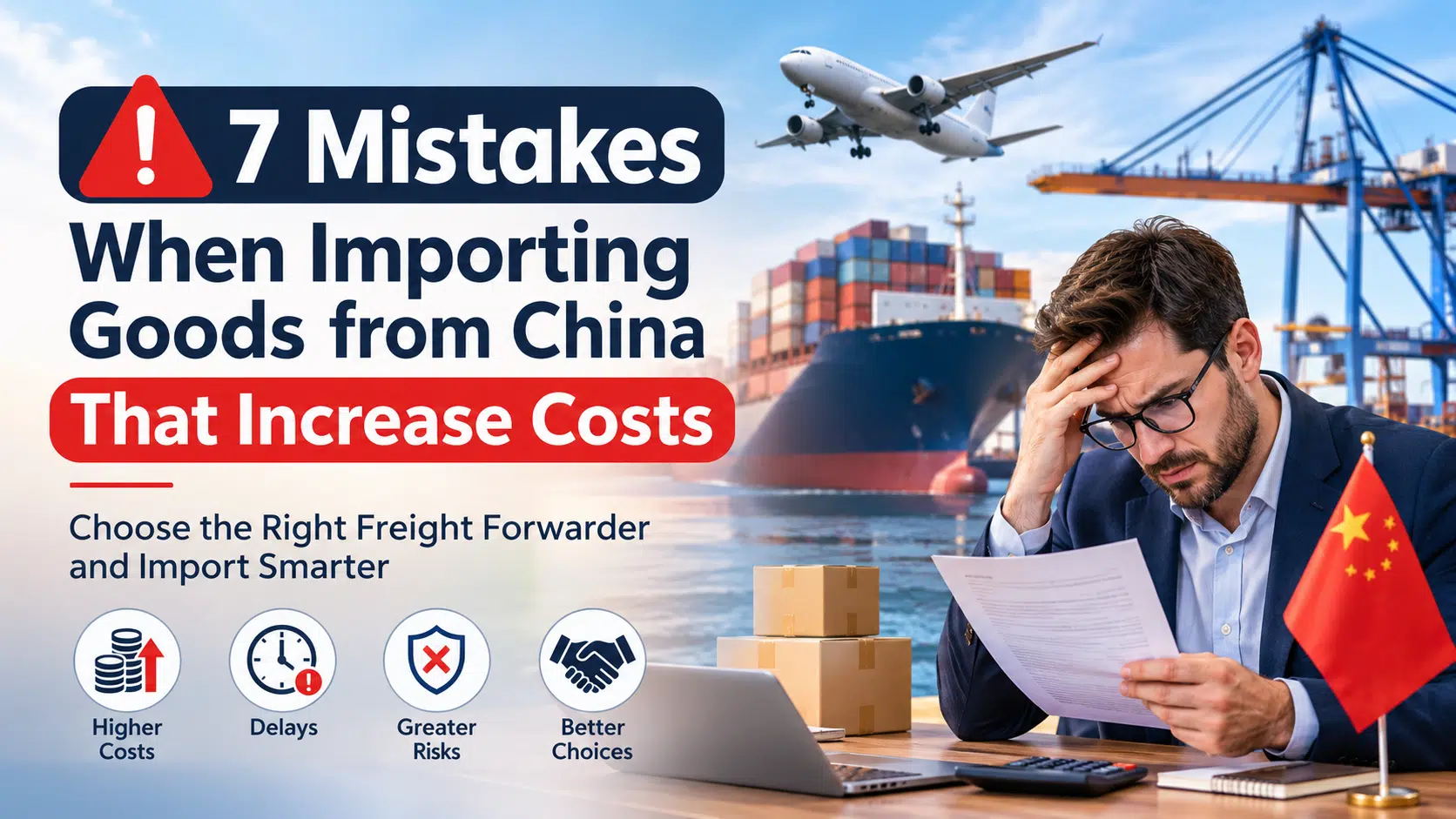
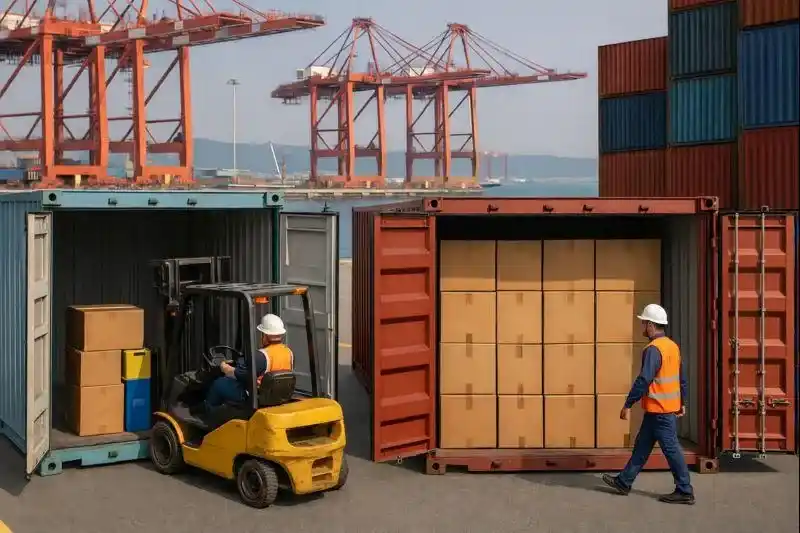
LCL stands for Less than Container Load and refers to shipping smaller cargo shipments in a shared container. In this method, your shipment does not occupy an entire container, so the available space is shared with shipments from other shippers.
In contrast, FCL stands for Full Container Load. Under this method, an entire container is allocated to a single shipper or shipment, even if the container is not filled to its full capacity.
Therefore, the difference between LCL and FCL is not limited to shipment size. They also differ in pricing methods, loading and unloading operations, cargo consolidation and deconsolidation, delivery time, and the level of control over the shipment. Choosing the right method depends on cargo volume and weight, product value, destination, delivery requirements, and total shipping costs.
What Exactly Is the Difference Between LCL and FCL?
Simply put, LCL is used when your cargo is not large enough to fill an entire container. Instead, your shipment shares container space with cargo belonging to other shippers.
Beyond how container space is allocated, LCL and FCL differ in their pricing structures, cargo handling procedures, delivery timelines, and the level of control over each shipment. The following table highlights the main differences to help you compare both options.
The main difference is not just the size of the shipment. Pricing, loading and unloading procedures, cargo handling, and risk management also vary between the two methods. When choosing between them, you should consider cargo volume, weight, value, destination, expected delivery time, and additional shipping costs. Making the wrong choice can increase your total shipping expenses or cause delays in your supply chain.
When Is LCL the More Practical Choice?
If your shipment is not large enough to justify the cost of reserving an entire container, LCL may be a suitable option. In this method, container space is shared among shipments from multiple shippers, and shipping costs are calculated based on your cargo’s allocated space and the applicable route rates.
LCL is particularly worth considering for small shipments, purchases made in multiple stages, and cargo with flexible delivery schedules. However, before choosing LCL, you should also calculate additional expenses, including supplier pickup, warehousing, cargo consolidation, loading, unloading, and deconsolidation at the destination.

When Does FCL Offer an Advantage?
When the shipment volume reaches a level where the cost of using a dedicated container becomes competitive with the total cost of LCL, FCL may be a more economical or operationally suitable option.
Under this method, the entire container is allocated to one shipper, so there is generally no need to consolidate the cargo with other shipments or separate it at the destination.
This arrangement can reduce the number of cargo handling stages and provide greater control over loading and unloading operations. However, FCL is not always cheaper or faster. The total cost, container type, weight restrictions, and shipping schedule must all be evaluated.
How Do Cargo Volume and Weight Determine the Choice Between LCL and FCL?
When choosing between LCL and FCL, both the volume and gross weight of your shipment must be considered. The volume of each package is calculated by multiplying its length, width, and height in meters. The total volume of all packages is expressed in cubic meters (CBM).
For many LCL ocean freight rates, pricing is based on weight or measurement (W/M). This means the actual weight is compared with the volume-based measurement, and the applicable chargeable quantity is determined according to the freight company’s tariff.
Under many ocean freight tariffs, one cubic meter is treated as equivalent to one metric ton for calculation purposes. However, the applicable calculation ratio, minimum chargeable volume, and additional fees should always be confirmed in the freight quotation.
For FCL shipments, costs are generally calculated based on the type and size of the container, together with the charges associated with the origin and destination. Therefore, obtaining a complete quotation for both options is essential.
As cargo volume increases, the cost difference between shared container space and reserving a dedicated container may become smaller. In such situations, you should request the final price for both options from your freight forwarder. For LCL, additional charges related to terminal operations and cargo consolidation should be considered. For FCL, container type and shipping route also affect the price.
The Role of Packaging Dimensions in Shipping Decisions
Sometimes, a shipment may have a relatively small product volume but occupy significantly more space because of inefficient packaging.
Adjusting carton dimensions, optimizing pallet arrangements, and reducing unused space can influence whether LCL or FCL is the better choice.
Therefore, before comparing freight rates, you should accurately calculate the number of packages, dimensions, gross weight, and loading arrangement.
Heavy Cargo Does Not Always Require FCL
A shipment may be heavy but occupy relatively little space. However, weight restrictions and route regulations remain important considerations.
In such situations, both shipping options should be evaluated based on actual weight and volumetric weight. The type of goods, palletization requirements, and limitations related to port handling equipment may also affect the final decision.

How Are LCL and FCL Shipping Costs Calculated?
Comparing LCL and FCL costs based solely on the quoted ocean freight rate from China is not sufficient.
With LCL, in addition to the basic ocean freight charge, expenses such as supplier pickup, transportation to the consolidation warehouse, warehousing, documentation, terminal handling, unloading, and cargo deconsolidation at the destination may be charged separately.
With FCL, you should also consider terminal charges at the origin and destination, such as Terminal Handling Charges (THC), documentation fees, inland transportation, customs clearance, and potential storage or delay-related charges, in addition to the container freight rate.
These costs vary depending on the route, freight company, contract terms, and shipment conditions. As a result, an initially low shipping rate may increase significantly after additional services and charges are included.
The best approach is to request a complete freight quotation and compare all expenses from the point of cargo collection in China to the final delivery location.
What Costs Should You Consider When Shipping LCL?
With LCL shipping, the total cost is not limited to the basic ocean freight charge. Depending on the route and contract, additional expenses may include supplier pickup, transportation to the origin warehouse, cargo consolidation, warehousing, loading and unloading, documentation, and destination charges.
Before confirming your shipment, make sure you understand exactly which services are included in the quoted price, what the minimum chargeable amount is, and which expenses will be billed separately.
Which Costs Are More Important When Shipping FCL?
With FCL shipping, container freight and the main transportation charge account for a significant portion of the total cost. However, port charges, Terminal Handling Charges (THC), documentation, inland transportation, customs clearance, and potential storage or delay-related expenses must also be considered.
The type and size of the container, origin and destination ports, shipping season, market conditions, and contract terms can all affect the final rate.
Therefore, comparisons should be based on the complete delivered cost rather than the ocean freight rate alone.
How Do Shipping Speed, Transit Time, and Delivery Differ?
One operational advantage of FCL is its simpler cargo handling process. When an entire container is reserved for a single shipper, there is generally no need to consolidate the shipment with other cargo and then separate it at the destination.
In contrast, LCL shipping requires additional operations at both the origin and destination, and the time needed to complete these procedures can affect the delivery schedule.
Actual shipping speed, however, depends on the origin port, destination port, vessel schedule, customs procedures, and freight company.
Therefore, if your goods are required for production, immediate sales, or a time-sensitive project, comparing freight rates alone is not enough. You must also evaluate the total supply chain timeline.
Why Does Your Supply Planning Matter?
When your inventory is limited, even a delay of a few days can create considerable costs. Production interruptions, missed sales opportunities, or delayed customer deliveries may cost significantly more than the difference between the two shipping methods.
That is why delivery speed should always be evaluated alongside shipping costs.
When Does Delivery Time Matter Less?
For products that already have sufficient inventory or are not urgently needed, saving money may be more important than a difference of a few days in delivery time.
In such situations, LCL can be a suitable option for smaller shipments, particularly when its total cost is significantly lower than the dedicated container alternative.
Which Method Offers Better Cargo Safety and Damage Control?
Every time cargo is handled, unloaded, separated, or reloaded, the potential for damage or operational errors increases.
With LCL, your goods are placed alongside shipments belonging to other shippers and typically go through additional handling procedures during collection and delivery.
In contrast, FCL provides greater control over the shipment from the time it is loaded into the container until it reaches its destination.
This is particularly important for fragile, expensive, moisture-sensitive, or specially packaged products.
However, choosing FCL alone does not guarantee cargo safety. Packaging quality, proper cargo securing, appropriate container selection, and compliance with shipping guidelines are equally important.
Why Is Packaging Important in LCL Shipping?
In shared container shipping, strong and protective packaging becomes even more important because the shipment may go through several handling stages.
Using suitable pallets, protective cushioning, proper strapping, and clear labeling can help reduce the risk of damage.
Sensitive products should also be protected with appropriate packaging materials to withstand handling and transportation conditions.
Is FCL Always Safer?
FCL generally reduces the number of times cargo needs to be directly handled. However, actual cargo safety depends on proper execution of the shipping process.
The container must be selected according to the type of goods, and the cargo must be properly secured inside it.
The container seal condition and delivery documentation should also be recorded to ensure accurate tracking and accountability if any problems occur.

Which Shipping Method Is More Suitable for Different Types of Goods?
There is no single shipping method that works best for every type of cargo.
Low-volume, low-value, and non-sensitive goods are generally more suitable for shared container shipping. In contrast, larger, fragile, or high-value shipments may benefit more from the advantages of a dedicated container.
When shipping goods from China, several factors should be evaluated together, including product type, packaging method, unit value, order quantity, and supply planning.
For example, if an importer purchases small quantities of spare parts every month, consolidating shipments may help control transportation costs.
However, if the same importer places a large order involving several pallets of goods, it may be worth reconsidering FCL.
The right decision should always be based on the actual conditions of each shipment.
Fragile and High-Value Goods
For products where damage could result in significant financial losses, reducing the number of handling stages becomes particularly important.
Using a dedicated container can provide greater control over cargo arrangement and handling operations.
However, cargo insurance and specialized packaging remain essential regardless of the shipping method.
Low-Volume and Low-Value Goods
For shipments that occupy limited space and have a relatively low value compared with their volume, paying for an entire container may not be economical.
In such situations, shared container shipping can be a more practical choice, provided that all additional charges are clearly calculated in advance.
How Can You Make the Final Decision Before Booking Your Shipment?
Suppose your shipment has a volume of 4 CBM and a gross weight of 2,000 kg.
If your freight company applies a 1:1 calculation ratio for LCL ocean freight, where one cubic meter is equivalent to one metric ton for billing purposes, the chargeable quantity in this example would be 4 units because the volume-based measurement is higher than the weight-based measurement.
Next, calculate the LCL rate together with all origin and destination charges. Then request a quotation for a suitable FCL container, including port charges, documentation, and inland transportation.
Finally, compare the total cost of both options up to the final delivery location.
If the price difference is small, factors such as delivery time, the number of cargo handling stages, and product sensitivity may influence your final decision.
Keep in mind that the applicable calculation ratio, minimum chargeable volume, and additional fees must always be confirmed in the freight company’s quotation.
1. Make a Practical Comparison
Suppose you have two shipments with different volumes. For the first shipment, calculate the shared container rate together with all additional charges.
Then request a quotation for a dedicated container using the same shipment information.
If the cost difference is minimal, the operational advantages of using an entire container may influence your final decision.
This approach helps you make an informed choice rather than relying on assumptions.
2. Do Not Overlook the Total Cost to the Final Destination
Sometimes, one shipping method appears cheaper at the origin but becomes more expensive at the destination.
For this reason, you should calculate the total cost from the supplier’s location to your final warehouse.
Include inland transportation, customs clearance, unloading, warehousing, and any other potential service charges in a single calculation to ensure an accurate comparison.
How Do Shipping Routes and Origin and Destination Ports Affect Your Choice?
Choosing between LCL and FCL depends on more than just cargo volume. The shipping route also plays an important role.
For ocean freight from China, the origin port, destination port, number of weekly shipping services, and terminal facilities can all affect delivery time and transportation costs.
On some routes, regular LCL services may be more economical or readily available. On other routes, using a full container may offer greater advantages.
The distance between the factory and the origin port, as well as the distance between the destination port and the final warehouse, should also be included when calculating total shipping costs.
How Do Contract Terms and Freight Forwarders Affect the Choice Between LCL and FCL?
The quality of a freight company’s services can significantly influence your experience with either LCL or FCL shipping.
A reliable freight forwarder should clearly communicate shipping costs, estimated transit times, delivery conditions, responsibilities, and any additional services.
With LCL, proper cargo consolidation and deconsolidation management are particularly important. With FCL, container booking, inland transportation coordination, and shipping documentation require careful management.
Therefore, when comparing freight quotations, do not focus solely on the lowest price. You should also evaluate the company’s track record, contract transparency, service coverage, and responsiveness when problems arise.
Final Checklist Before Booking LCL or FCL
Before selecting your shipping method, review the following points:
- Calculate the shipment volume using the final packaging dimensions and determine the gross weight.
- For LCL, check the weight and volume calculation method, minimum charges, and origin and destination fees.
- For FCL, confirm the appropriate container type and size and request a complete quotation covering all related charges.
- Evaluate the total shipping timeline, including cargo collection, consolidation, vessel departure, unloading, customs clearance, and final delivery.
- Consider product value, cargo sensitivity, packaging quality, and the risk of damage before making your decision.
- Compare complete freight quotations up to the final destination rather than making your decision based only on the initial freight rate.

Conclusion
Choosing between LCL and FCL should always be based on a realistic comparison that takes the specific conditions of each shipment into account.
LCL can be an economical and flexible solution for smaller shipments, staged purchases, and orders that do not require a dedicated container.
In contrast, FCL offers considerable advantages for larger shipments, sensitive goods, and orders that require greater control or more predictable scheduling.
In both cases, looking only at the freight rate is not enough. Origin and destination charges, customs clearance, cargo handling, warehousing, delivery time, and the risk of damage must also be evaluated.
Before booking your shipment, prepare accurate cargo specifications, request complete quotations for both options, and choose the method that provides the best balance between cost, speed, and cargo safety.
Frequently Asked Questions (FAQs)
Is LCL more suitable for smaller shipments?
Yes. When your cargo does not occupy an entire container, using shared container space can be more economical. However, additional charges at the origin and destination should also be considered.
Is FCL a better option for fragile and high-value goods?
Yes. With FCL, your cargo is handled separately from other shippers’ goods, generally reducing the number of loading and unloading operations. This can provide greater control over your shipment.
Is the choice between LCL and FCL based only on cargo volume?
No. Weight, product value, delivery time, destination, and additional shipping charges also influence the choice of the most suitable shipping method.
Is LCL always cheaper than FCL?
No. The total cost of LCL depends on cargo volume and weight, freight rates, origin and destination charges, and additional services. In some cases, as shipment volume increases, using a dedicated FCL container may become more economical.
Is FCL always faster than LCL?
No. FCL generally eliminates the need for cargo consolidation and deconsolidation, resulting in a simpler handling process. However, actual delivery time depends on the shipping route, vessel schedule, port conditions, and customs procedures.